The short version: platelet-rich plasma is a legitimate, low-risk procedure whose evidence differs sharply by use. The case is strongest for knee osteoarthritis and for some forms of hair thinning, weaker for skin rejuvenation, and, for erectile or female sexual function, it remains investigational according to the American Urological Association. A responsible clinic tells you which of those categories your concern falls into before it quotes a price.
What PRP is, and what it is not
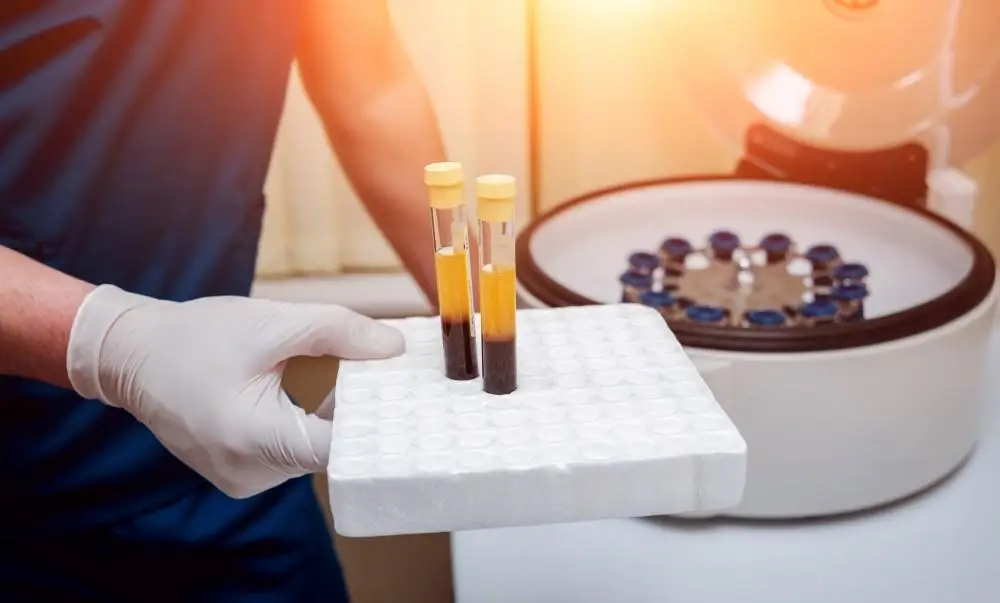
Platelet-rich plasma is made from your own blood. A small volume is drawn, spun in a centrifuge to separate the red cells, and the fraction that is concentrated in platelets is collected for injection or for topical application during microneedling. Platelets release growth factors when they are activated, including platelet-derived growth factor, transforming growth factor beta and vascular endothelial growth factor, and the premise of the therapy is that delivering a concentrated dose to a poorly healing or aging tissue can nudge the repair process.
Three clarifications prevent most confusion. First, PRP is not a stem cell treatment: it contains platelets, not the progenitor cells that are sometimes marketed as regenerative, and it does not regenerate tissue in the way that phrase implies. Second, PRP is not one standardized product. Platelet concentration, the presence or absence of white blood cells, the spin protocol and whether the preparation is activated before injection all vary between devices and clinics, and that variability is one reason trial results are hard to compare. Third, the devices used to prepare PRP are cleared by the FDA for processing blood, so most of the clinical uses below are off-label, which is legal and common in medicine but should be stated plainly.
Evidence by use
| Use | How strong the evidence is | What to expect |
|---|---|---|
| Knee osteoarthritis | Strongest of the four, with multiple randomized trials, but professional guidelines are divided | Possible reduction in pain and stiffness over months for mild to moderate disease; little expected benefit in advanced, bone-on-bone arthritis |
| Androgenetic hair thinning | Moderate; meta-analyses of randomized trials generally favor PRP, with small trials, inconsistent protocols and signs of publication bias | Increased density and thickness for some patients, typically requiring a series of sessions and maintenance |
| Facial skin rejuvenation with microneedling | Limited, mostly small and split-face studies | A modest additional improvement over microneedling alone, if any |
| Sexual function in men and women | Investigational; the AUA classes PRP for erectile dysfunction as experimental | Unproven; any benefit reported in small studies has not been confirmed by large controlled trials |
Joint pain: the strongest case, with an honest caveat
About one in five US adults, roughly 54 million people, report doctor-diagnosed arthritis according to the CDC, and the knee is the joint most studied in PRP trials. Several randomized trials and meta-analyses have found that PRP injections relieve pain and improve function in mild to moderate knee osteoarthritis for six to twelve months, and some have found an advantage over hyaluronic acid or corticosteroid injections. Preparations that contain few white blood cells appear to perform better in the intra-articular setting, although that preference rests on lower levels of evidence.
The caveat is that professional societies have not reached a shared position. The American Academy of Orthopaedic Surgeons published an evidence review of PRP for knee osteoarthritis in 2021 that did not make a recommendation for or against it, and other guideline groups, including the Osteoarthritis Research Society International and the American College of Rheumatology, have not recommended routine use. The reasons are heterogeneity in preparations, short follow-up and the substantial placebo response that every injection therapy for osteoarthritis produces. Evidence for the hip, shoulder, tendons and lower back is thinner than for the knee, and expectations there should be correspondingly modest. Our articles on whether arthritis is inevitable and what an x-ray fails to show and on the order in which to try hip treatments discuss where PRP fits in a joint plan.
Hair: a reasonable option for early thinning
For androgenetic alopecia, meta-analyses of randomized controlled trials have generally reported greater hair density with PRP than with placebo or no treatment, although the trials are small, the preparation and injection schedules differ, and some analyses found evidence of publication bias that may inflate the pooled effect. PRP is not FDA-approved for hair loss, and it acts on the follicles that remain, so it is considerably more useful in early thinning than in areas that have been bald for years. It also does not replace finasteride or minoxidil, which have far larger evidence bases, and the most credible approach for many patients combines them. We cover this in more depth in our article on what PRP can regrow and what it cannot.
Skin: PRP with microneedling
When PRP is applied during microneedling, the claim is that the growth factors improve collagen production, texture and tone beyond what the needling achieves alone. The studies are mostly small, many are split-face designs with short follow-up, and the incremental benefit over microneedling by itself is modest and sometimes undetectable. That does not make the combination worthless, since many patients appreciate the faster recovery they report, but the extra cost should be weighed against that evidence. Procedures in this category are sometimes marketed as the “vampire facial,” and this is where the safety of the setting matters most.
Why the setting matters
In April 2024 the CDC reported the first documented cases of HIV transmitted through cosmetic injection: three women who had received microneedling with blood products at an unlicensed spa in Albuquerque that had been shut down in 2018 for unsafe practices. Investigators found unlabeled tubes of blood stored beside food and no records of who had been treated. The lesson is not that PRP is dangerous when performed properly, but that it involves your blood and must be performed in a licensed medical setting that uses single-use sterile kits and strict labeling.
Sexual wellness: the claim to treat with the most skepticism
PRP injections are marketed to men for erectile function and to women for lubrication, arousal and urinary symptoms under names such as the P-Shot and the O-Shot. The AUA and Sexual Medicine Society of North America guideline on erectile dysfunction classes PRP as experimental, based on expert opinion, and none of the regenerative approaches marketed for erectile dysfunction, whether PRP, shockwave or stem cells, is FDA-approved for that use. A 2024 network meta-analysis found statistically significant improvement with PRP but questioned the clinical relevance, and a report presented at the 2023 AUA meeting described two studies in which PRP performed no better than placebo.
The most important point for men is that erectile difficulty is frequently the first sign of vascular disease, and it deserves a medical evaluation before any injection; our article on erectile dysfunction as a vascular symptom explains why. PRP is also a treatment for erectile function, not for size, and it should not be presented as one.
Safety, and who should be cautious
Because PRP is autologous, allergic reaction is unlikely. The common effects are pain and swelling at the injection site, bruising and a temporary flare of joint discomfort in the first days, which is why it is usually recommended to avoid anti-inflammatory drugs such as ibuprofen around the procedure if your physician agrees. Infection is rare when the technique is sterile. People who take anticoagulants, have a low platelet count or a blood disorder, have an active infection or cancer in or near the treatment area, or are acutely ill should discuss whether the procedure is appropriate, and the preparation itself is only as consistent as the system used to make it.
Questions to ask any clinic offering PRP
Ask which system prepares the PRP and what platelet concentration it yields, whether the preparation is leukocyte-rich or leukocyte-poor and why that was chosen for the area being treated, what the evidence is for your specific indication in plain terms, how many sessions are planned and what the total cost is, and what the clinic will do if there is no improvement after the agreed series. Dr. Daniel Moghadam offers PRP therapy at Modern Aesthetica in Beverly Hills, and an honest consultation should leave you with a clear sense of whether your problem belongs among the better-supported uses or the investigational ones.
Common questions
Is PRP therapy FDA-approved?
The devices that prepare PRP are FDA-cleared for processing blood, but PRP injection for joints, hair, skin or sexual function is an off-label use. Off-label use is legal and common, and it means the specific use has not been reviewed by FDA as a labeled indication.
Does PRP work for knee arthritis?
Several randomized trials show reduced pain and better function in mild to moderate knee osteoarthritis for roughly six to twelve months, but guideline bodies disagree about routine use, and little benefit is expected in advanced disease.
How many PRP sessions are needed for hair loss?
Studies commonly use three treatments about a month apart followed by maintenance, but protocols vary widely, which is one reason published results are inconsistent. Your physician sets the plan after examining your scalp.
Is PRP the same as stem cell therapy?
No. PRP is a concentrate of platelets from your own blood. Stem cell products contain progenitor cells and are regulated differently, and the FDA has taken action against clinics marketing unapproved stem cell products.
Is the vampire facial safe?
It can be when performed in a licensed medical setting with single-use sterile equipment and strict labeling of blood products. The documented HIV cluster in New Mexico occurred at an unlicensed spa with serious infection-control failures.
Does PRP work for erectile dysfunction?
It is considered investigational. The American Urological Association guideline classes PRP for erectile dysfunction as experimental, and large controlled trials confirming a benefit are lacking. Erectile problems also warrant a cardiovascular evaluation.
How long do PRP results last?
It depends on the use. Reported benefit in knee osteoarthritis commonly lasts several months to a year, hair results usually require maintenance, and cosmetic effects are modest and variable.
Sources
- CDC: arthritis basics, prevalence among US adults (National Health Interview Survey, 2021-2023)
- American Academy of Orthopaedic Surgeons: technology overview, platelet-rich plasma for knee osteoarthritis (2021)
- Platelet-rich plasma for androgenetic alopecia: a systematic review and meta-analysis of randomized controlled trials
- Effectiveness of platelet-rich plasma in the treatment of androgenic alopecia: a meta-analysis
- Burnett AL et al. Erectile dysfunction: AUA guideline. Journal of Urology 2018;200(3):633-641 (amended 2022).
- American Urological Association News: shock wave therapy, platelet-rich plasma and stem cell therapy for erectile dysfunction
- CDC. Morbidity and Mortality Weekly Report, April 2024: HIV transmission associated with cosmetic injection services at an unlicensed spa, New Mexico.
Reviewed by Daniel Moghadam, M.D., founder and medical director of Modern Aesthetica. Last reviewed November 2026. This article is educational and is not a substitute for a consultation; what is appropriate for you depends on your history, your examination and your goals.
Modern Aesthetica
8907 Wilshire Blvd, Suite 270, Beverly Hills, CA 90211
Phone: (213) 895-4730
Hours: Mon–Thu 10:00am–5:00pm · Fri 9:00am–5:00pm · Sat & Sun closed
Serving Beverly Hills, West Hollywood, Santa Monica, Brentwood, Hollywood and greater Los Angeles.