
The short version: biohacking has no agreed definition, and that vagueness does real work. The term covers sleep, exercise and nutrition — which have excellent evidence — alongside peptide injections and unapproved compounds, which mostly do not. Bundling them together lets the credibility of the first group transfer to the second. We offer treatments in this area, and our position is that you are owed the regulatory status and the strength of evidence for anything proposed, stated plainly and before you pay for it.
Below is how to sort the categories, where peptides actually stand, and the questions that separate a responsible provider from a confident one.
Three different things called biohacking
| Category | Examples | Evidence |
|---|---|---|
| The fundamentals | Sleep, exercise, resistance training, nutrition, not smoking, weight, sun protection | Strong and consistent; outperforms everything below |
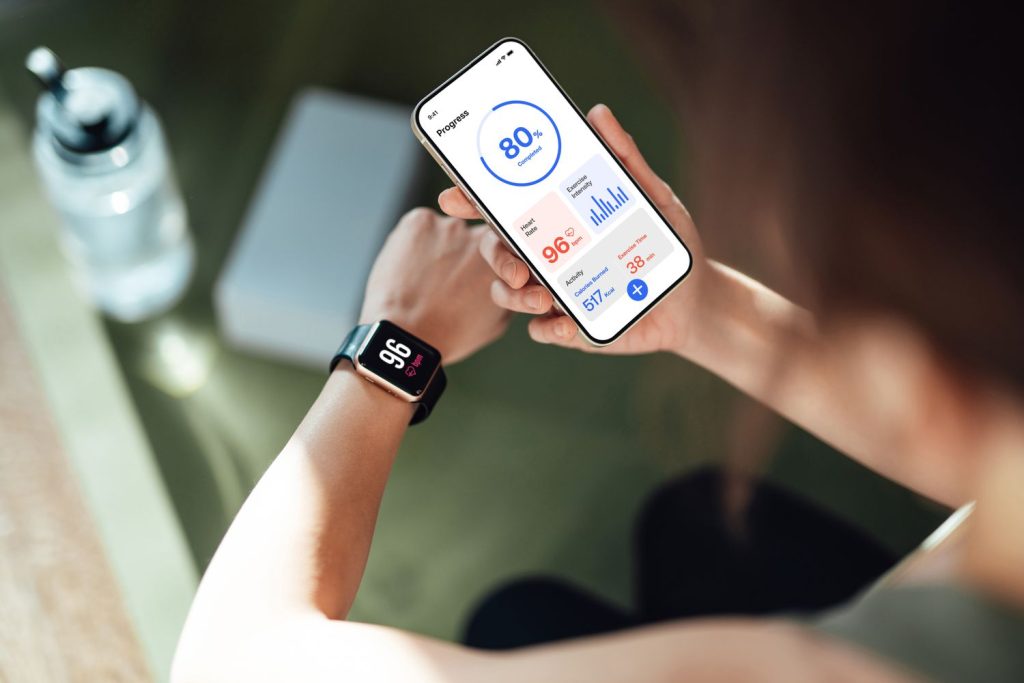
| Measurement | Blood panels, wearables, continuous glucose monitors, sleep tracking | Useful when a specific question is being answered; often not when it is not |
| Experimental interventions | Peptide injections, unapproved compounds, nutrient infusions, exotic protocols | Limited to absent human evidence for most of what is marketed |
Nearly all the marketing energy goes into the third category. Nearly all the benefit sits in the first.
A practical filter: if someone recommends an experimental intervention before asking how much you sleep, whether you do resistance training, what you eat and whether you smoke, they are selling the third category while skipping the one that would actually help you.
Where peptides actually stand
Peptides are short chains of amino acids that act as signalling molecules. This is legitimate biology, and several peptide medicines are genuinely approved and effective for specific conditions — insulin is a peptide, as are the GLP-1 agonists now widely used for diabetes and weight management.
The peptides marketed in wellness settings for recovery, anti-ageing, tissue repair or growth hormone stimulation are a different matter. Most are not approved for those uses. They are supplied as compounded preparations, which are not reviewed for safety and effectiveness in the way approved medicines are.
The regulatory picture tightened in 2023, when the FDA placed a number of popular wellness peptides — including BPC-157 and several growth hormone secretagogues — into a category of substances it considered to pose significant safety risks for use in compounding. That is a material fact about what is being offered, and it should be disclosed rather than discovered.
On the evidence itself: much of what is cited in this space is animal research, laboratory work, or small uncontrolled human studies. Animal findings frequently fail to replicate in humans, and uncontrolled studies cannot separate a treatment effect from expectation and regression to the mean. Absence of good evidence is not proof that something does not work — but it is not evidence that it does, and the distinction is where most of the marketing lives.
One specific caution worth stating: compounds that stimulate growth hormone are not risk-free. Growth hormone signalling affects glucose metabolism and cell proliferation, and the long-term consequences of raising it in healthy adults are not well characterised.
Measurement, used well and used badly
Testing and tracking are the part of this field we think is most defensible — when there is a question being answered.
Used well: establishing a baseline before an intervention, identifying a genuine deficiency, tracking blood pressure or HbA1c where there is risk, finding an individual food response that general advice would miss, identifying poor sleep duration or likely sleep apnoea.
Used badly: broad panels with no clinical question attached, where an out-of-range value on a marker with no established treatment implication generates anxiety and an intervention; or continuous glucose monitoring in someone without diabetes who begins treating every normal post-meal rise as harm. Normal glucose fluctuates after eating. Interpreting that as damage drives unnecessary restriction and, in some people, a genuinely unhealthy relationship with food.
The same reasoning we apply to nutrient infusions applies here, which we set out in who actually benefits from IV therapy: the route and the test are worth paying for when they change a decision, and not when they do not.
What is actually worth doing
This list is unexciting, and it outperforms everything marketed as optimisation:
- Sleep seven to nine hours consistently. Affects appetite, glucose handling, hormone production, mood and cognition. Nothing in the third category compensates for chronic short sleep.
- Resistance training, two or more sessions a week. Preserves muscle mass, which is strongly associated with healthy ageing and functional independence.
- Regular aerobic activity. Cardiovascular fitness is among the better predictors of long-term outcomes.
- Adequate protein, particularly with age.
- Do not smoke; keep alcohol modest.
- Daily sun protection. The most effective anti-ageing intervention available for skin, by a wide margin.
- Know and manage your blood pressure, blood sugar and cholesterol.
The questions to ask
- What exactly is this, and is it approved for the use you are proposing?
- What human evidence exists — randomised and controlled, or animal and anecdotal?
- What will be measured before and after, and what result would count as it working?
- What are the risks, and how will they be monitored?
- What would make you recommend stopping?
- What are the fundamentals I should address first?
A provider who answers these plainly, including saying when evidence is thin, is operating responsibly. One who answers with testimonials and confidence is not. How we approach this area and what we will and will not claim is set out on the biohacking page, and our general position on reading emerging fields critically on the regenerative medicine page.
Common questions
What does biohacking actually mean?
It has no agreed definition, which is part of the problem. In practice it covers everything from well-evidenced basics such as sleep, exercise and nutrition, through monitoring with wearables and blood testing, to experimental interventions including peptide injections and unapproved compounds. Grouping these under one word lets the credibility of the evidenced end lend borrowed authority to the experimental end.
Are peptide therapies FDA-approved?
Some peptides are approved medicines for specific conditions. Many of those marketed in wellness settings are not approved for the uses being promoted, and are supplied as compounded preparations. In 2023 the FDA placed several popular wellness peptides, including BPC-157 and some growth hormone secretagogues, into a category of substances it considered to present significant safety risks for compounding. Anyone offering these should tell you their regulatory status without being asked.
Do peptides for recovery and anti-aging work?
The honest answer is that for most of the ones marketed in this space, high-quality human evidence is limited or absent. Much of what is cited is animal research, laboratory work, or small studies without adequate controls. That does not prove they do nothing, but it is not the same as evidence that they work, and the gap between the two is where most marketing operates.
Is a continuous glucose monitor useful if I am not diabetic?
It can be genuinely informative about how you personally respond to particular meals, which is more individual than general advice allows for. The caution is interpretation: normal glucose fluctuates after eating, and in people without diabetes those fluctuations are not usually meaningful in themselves. Treating every rise as harmful can drive unnecessary restriction and, in some people, an unhealthy relationship with food.
What has the strongest evidence in this field?
Consistently: sufficient sleep, regular exercise including resistance training, not smoking, moderate alcohol intake, a predominantly whole-food diet with adequate protein, maintaining a healthy weight, sun protection, and managing blood pressure, blood sugar and cholesterol. These are unglamorous and unprofitable, and they outperform everything marketed as advanced optimisation.
What questions should I ask before starting a protocol?
What specifically is being given and is it approved for this use. What human evidence exists, and is it randomised and controlled. What is being measured before and after. What are the risks and how will they be monitored. What would make us stop. A provider who can answer these plainly is operating responsibly; one who answers with testimonials is not.
Reviewed by Daniel Moghadam, M.D., founder and medical director of Modern Aesthetica. Last reviewed October 2026. Compounded peptide preparations are not FDA-approved for most uses marketed in wellness settings. Any such treatment should follow a discussion of regulatory status, evidence and monitoring.
Modern Aesthetica
8907 Wilshire Blvd Suite 270, Beverly Hills, CA 90211
Phone: (213) 895-4730
Hours: Mon–Thu 10:00am–5:00pm · Fri 9:00am–5:00pm · Sat & Sun closed
Serving Beverly Hills, West Hollywood, Santa Monica, Brentwood, Hollywood and greater Los Angeles.


